The Committee for Sane Transportation and Environmental Policy (CSTEP) provided overarching coordination for the advocacy effort. By combining research, public education, and direct engagement with policymakers, CSTEP helped elevate the park’s value in city planning conversations.
A pivotal presentation to Governor James Rhodes in 1970 ultimately led to the withdrawal of the Clark Freeway from the Interstate Highway System. This advocacy ensured that the Shaker Parklands remained a protected natural and educational resource, establishing a model for integrating environmental awareness into public policy.
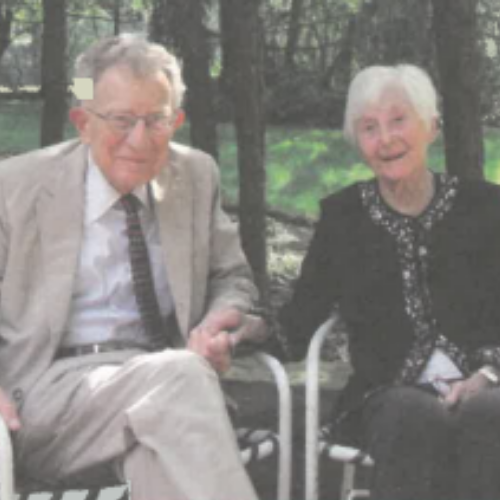
Hope and Stanley Adelstein
Hope and Stanley Adelstein were dedicated environmental advocates whose lifelong support helped advance conservation efforts across the region—including the fight to stop the Clark Freeway.
As an attorney for the Sun Press, Stanley had a front-row view of the Freeway Fighters’ campaign. Together, he and Hope were deeply inspired by the power of community action, later describing the effort as a “David vs. Goliath” victory.
The Adelstein's remained committed to environmental causes for decades, supporting organizations such as the Nature Center at Shaker Lakes, Cuyahoga Valley National Park, the Sierra Club, and the Earth Day Coalition.
At the Nature Center, they served as Honorary Life Directors, supported the Annual Fund, and established a fund for early childhood environmental education.
Their generosity also helped enhance accessibility at the Nature Center, including improvements to the All People’s Trail for visitors with visual impairments.
Their legacy lives on through the spaces they helped protect and the communities they inspired.
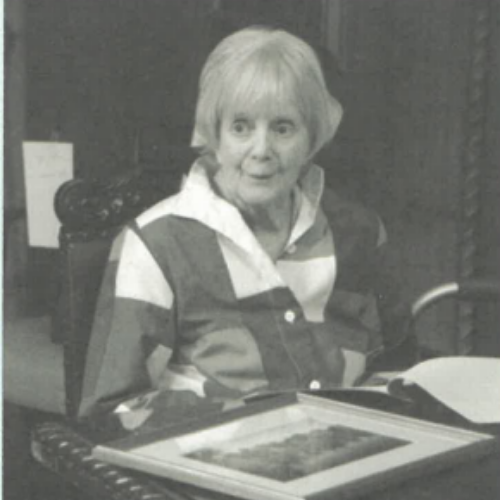
Kay Fuller
Catherine “Kay” Fuller led the grassroots movement that helped save the Shaker Parklands from freeway development that would have destroyed hundreds of acres of habitat and homes.
A founding member of the Park Conservation Committee, Kay helped mobilize a broad coalition of garden clubs, civic groups, and concerned citizens. As chair of the Radio and Television Committee—and later vice president—she played a key role in shaping the campaign’s public voice.
Kay helped produce a series of illustrated reports that documented the beauty of the parklands and the impact the proposed freeways would have. She also created one of the first visual maps showing how the highways would cut through Lower Shaker Lake and surrounding forest.
Though she described herself as shy, Kay became a powerful advocate—testifying at local, state, and federal levels to defend the value of natural spaces.
Even after the freeway plans were defeated in 1972, she continued to champion conservation, reminding others that protecting parklands requires “an alert and constant effort.”
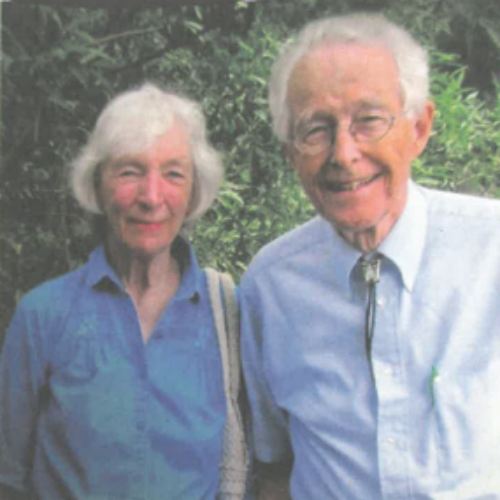
Florence Spurney
Florence Spurney’s deep love of nature inspired her to help protect the Shaker Parklands for future generations.
She joined fellow community members in opposing the Clark and Lee Freeways, writing letters and advocating for preservation. Her most impactful contribution was helping advance the effort to establish the Nature Center as a National Environmental Education Landmark—a designation awarded in 1971 that protects the land from future development.
Florence also played a hands-on role in demonstrating the parklands’ educational value. When a planned instructor was unable to lead student hikes, she stepped in—guiding local schoolchildren through the lakes and helping them connect with the natural world.
She remained actively involved with the Nature Center, serving on the Natural Resources Management Committee and continuing to lead hikes even after staff naturalists were in place.
Florence’s respect for nature shaped her family as well, inspiring lifelong interests in science, conservation, and the outdoors.
She believed deeply in the importance of natural spaces as places for peace and reflection—values that continue to define the Nature Center today.
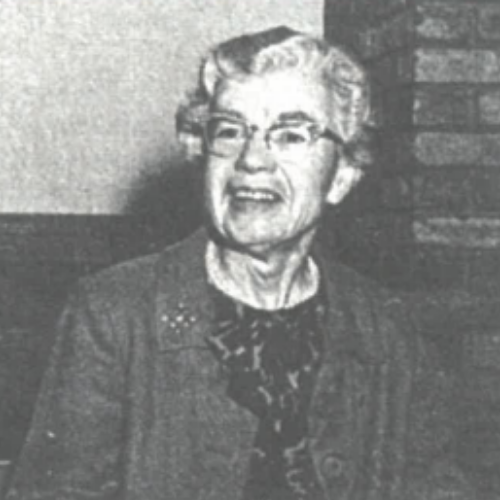
Mary Elizabeth Croxton
Mary Elizabeth Croxton was a leading voice in the effort to stop the Clark and Lee Freeways—and a powerful advocate for preserving the Shaker Parklands.
As chairperson of the Park Conservation Committee of Greater Cleveland, she mobilized a network of 35 garden clubs across the region. She described the parklands as a “priceless heritage,” warning that replacing them with concrete roadways would be “an unthinkable act of vandalism.”
Croxton brought the landscape to life for others, leading tours and highlighting native plants, wildflowers, and the area’s importance as a bird sanctuary and migration stop.
Under her leadership, the committee organized a large-scale letter-writing campaign, rallying public support and delivering hundreds of letters to regional planning officials in opposition to the freeways.
She also helped document the beauty of the lakes through a strategic photo report shared with key decision-makers, amplifying the campaign’s reach.
As a member of the Nature Center Advisory Committee, Croxton supported the creation of the Nature Center to ensure the land would be protected and appreciated for generations.
She believed deeply in the restorative power of nature, often reminding others that “the human mind needs the release from tension that natural open spaces afford.”
Freeway Fighter: Walter Kelley
Walter Kelley, former law director and mayor of Shaker Heights, played a critical role in protecting what is now the Nature Center at Shaker Lakes—ensuring it remained a place for education, recreation, and connection to nature.
In 1966, Kelley secured a pivotal agreement with the City of Cleveland: a land lease that allowed the Nature Center to be built while keeping the land protected for park use. This innovative solution ensured long-term conservation, with the current lease extending through 2040 and an option to renew.
Kelley spent countless hours navigating the complex legal details of the lease, driven by his deep commitment to preserving the parklands for future generations.
He also helped guide the Nature Center’s early development as an original board member and Executive Committee member.
His efforts helped secure this space as a vital green refuge and outdoor classroom.
A historical marker honoring Kelley and the Freeway Fighters stands at the North Woodland Bridge.
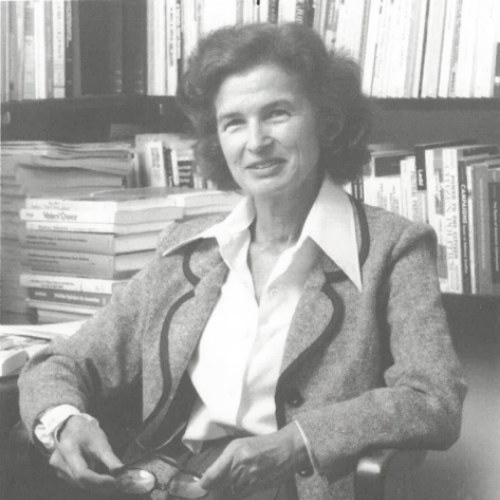
Kathleen Barber
Kathy’s lifelong passion for nature was rooted in childhood excursions in Ohio’s woodlands. A Wellesley graduate and later a political science professor at John Carroll University, Kathleen became one of the driving forces behind the freeway opposition. When plans threatened to cut through the Shaker Lakes and surrounding parklands, she helped organize a bipartisan citizen committee, coordinated with garden clubs, and meticulously documented every step of the struggle—including turning the county engineer’s dismissive “Rinky Dinky Duck Pond” comment into a rallying slogan for opposition, while mobilizing support from both local residents and elected officials. The campaign successfully stopped the Clark and Lee Freeways, protecting not only the parklands but the surrounding neighborhoods and paved the way for the creation of the Shaker Lakes Nature Center.
As a founding trustee of the Nature Center, she championed its mission of environmental education, helping ensure that the Shaker Lakes remained a living classroom for future generations. She also served two terms on Shaker Heights City Council, chaired an environmental committee, and contributed to civic initiatives including Cleveland Public Radio, the Great Lakes Science Center, and the George Gund Foundation.
Her legacy continues through a memorial habitat restoration fund established by her children in 2014. Today, that fund supports the ongoing restoration of the Nature Center’s landscape—helping protect biodiversity, improve habitat health, and ensure the land remains a thriving outdoor classroom.
From restoring wetlands to replacing invasive species with native plants, this work reflects Kathleen’s enduring vision: a resilient, vibrant ecosystem that supports both wildlife and people.
Norman Krumholz
As Planning Director for the City of Cleveland under Mayor Carl Stokes, Norman Krumholz brought critical leadership to the fight against the Clark Freeway.
Recognizing the “devastation” the project would cause, Krumholz opposed plans that would have displaced residents, reduced housing, and cut through the heart of the Shaker Lakes parklands.
With strong support from Mayor Stokes, he challenged regional agencies and state officials to reconsider the project. He also worked alongside a coalition of local attorneys and community advocates, helping to strengthen the opposition.
Krumholz advanced an alternative plan that redirected the freeway away from both Cleveland neighborhoods and the Shaker Parklands—keeping public pressure on decision-makers and reshaping the conversation.
His efforts helped build rare alignment between city and suburban communities around a shared goal: protecting people and place.
Krumholz often emphasized two lessons from the fight—believe you can make a difference, and never give up.
Jim Davis and Howard Maier
A key force behind the fight against the Clark Freeway was a group of local attorneys who combined strategy, expertise, and bipartisan collaboration.
Attorney Jim Davis and his colleagues worked to uncover the full scope of the proposed freeway and quickly realized that stopping it would require more than legal action. Instead, they built a bipartisan coalition—bringing together leaders from both political parties to strengthen opposition.
Working alongside community advocates, they helped educate residents about the freeway’s path and its impact, organizing forums and building public awareness. Their approach was clear: the more informed and engaged the community, the stronger the resistance.
They also recognized early that litigation would not succeed, as similar efforts across the country had failed. Instead, they focused on public pressure and political influence—an approach that proved effective.
Their work helped unify the Heights communities and amplify a powerful message: informed, organized citizens can shape the future of their environment.